
Why The Arts
The arts spark imagination, curiosity and wonder, enriching our lives with unique opportunities for self-expression and growth. The arts excite, challenge, and make us feel something; they reflect our humanity. Through the arts, we explore perspectives of self and others, nurturing a sense of identity and belonging. The arts evoke powerful physical, emotional and intellectual responses, inspiring us to think, act and communicate creatively, as we challenge and celebrate our world.
The nature of learning in The Arts
In The Arts, learners engage with the creative process, grapple with ideas, experiment, explore possibilities and refine their ability to communicate artistic intent. Supported by subject-specific skills, learners focus on and value the process of artistic endeavour while enjoying and appreciating artistic products.
Learners express their ideas through movement, images, objects, words and sounds with curiosity and care. They collaborate and communicate in ways that matter: share opinions, feelings and stories and refine their artistic voices and ideas clearly. As learners develop these skills, they strengthen their capacity to make meaning, respond to the world and contribute with confidence and purpose.
Learning in the arts nurtures an appreciation for the rich diversity of artistic practice and ways of making. Learners move from classroom activities to multimodal texts, galleries, theatres and media, tracing connections across cultures and time. At the heart of this learning is compassion and inclusivity: learners watch and listen to different experiences, value diverse voices, question fearlessly and delight in the power of the arts. Through these experiences, learners discover how the arts shape meaning, influence perspectives and opens possibilities for their futures.
Essential Learning
Essential Learning identifies the dispositions, capabilities and knowledge that matter most in The Arts. Together, these interdependent dimensions support learners to deepen their understanding and apply what they learn in different contexts (Figure 1).
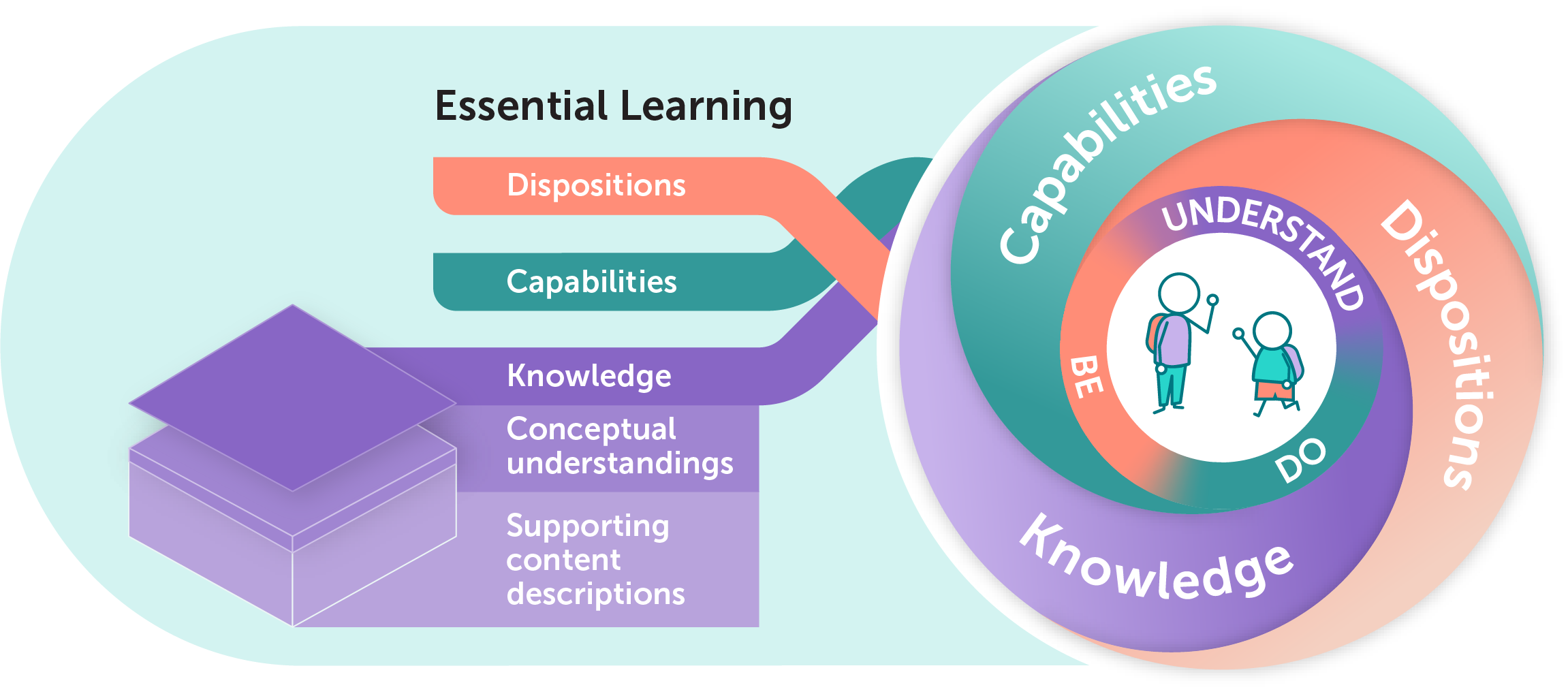
Figure 1: The dispositions, capabilities and knowledge embedded in the SA Curriculum: The Arts
Learn more about the SA Curriculum Framework and its interrelated elements.
In The Arts, learners activate their creativity, confidence, empathy and self-awareness through rich experiences with subject-specific content, artworks and diverse perspectives. These dispositions shape how learners inquire, interpret, communicate and respond thoughtfully. They support learner’s success and broader engagement with arts opportunities and diverse perspectives.
Through engagement with artistic processes, learners develop creative thinking and critical analysis, intercultural responsiveness, personal insight and collaboration, embodied and applied practice, and ethical reasoning and action. These capabilities enable learners to think independently, appreciate diverse perspectives and make constructive choices. Through ongoing reflection and meaningful application, learners strengthen their ability to apply these capabilities in unfamiliar contexts with confidence and care.
The 3 conceptual organisers Creativity, Context and culture and Communication organise knowledge in The Arts around conceptual understandings that help learners make meaning beyond individual tasks. Educators use supporting content descriptions flexibly to design learning experiences in different contexts to build these conceptual understandings.
Learning Standards
Learning Standards describe intended learning at each band by interweaving conceptual understandings, capabilities and dispositions. They describe learning holistically in terms of understanding, doing and being (Figure 2).
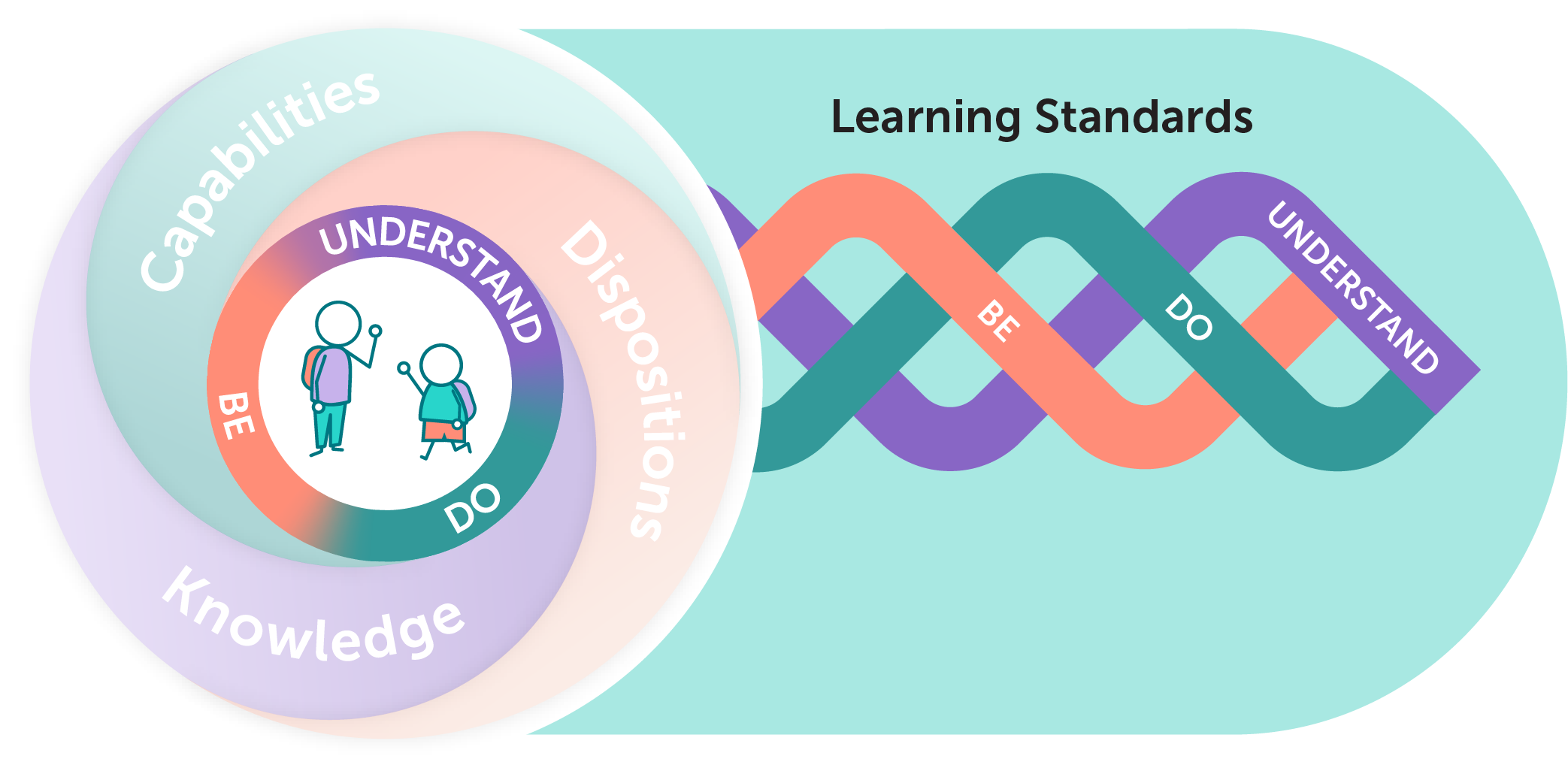
The paragraphs each represent a conceptual organiser and bring together relevant conceptual understandings, capabilities and dispositions to describe intended learning. Learning Standards should be read as a whole, with sentences and paragraphs contributing to an integrated description of learning.
Considerations for enacting the SA Curriculum: The Arts
The curriculum allows schools the flexibility to develop teaching programs that align to their context. Schools might choose to partner with local artists or the arts industry to complement their program or develop integrated units within The Arts or across the SA Curriculum.
Keeping Safe: Child Protection Curriculum
The Arts learning intersects with relevant aspects of the Keeping Safe: Child Protection Curriculum (KS:CPC) when appropriate.
Structure
The SA Curriculum: The Arts is designed for all learners to engage in The Arts from reception to year 10. The Arts curriculum has 5 subjects and is organised into 2-year bands from years 1 to 10, with reception presented as a single year level.
The Arts curriculum supports learners to:
- engage in all 5 Arts subjects in each band from reception to year 6
- experience one or more Arts subjects in depth in years 7 to 8
- specialise in one or more Arts subjects in years 9 to 10.
Dance has purpose and form, communicating ideas and stories through the body as the instrument of expression and movement as the medium. Learners use the elements of dance to explore and practise choreographic, technical, expressive and performance skills, using physical and verbal communication to recognise and represent ideas.
The elements of dance are body, space, time, dynamics and relationships. These are fundamental to all learning in this subject.
The ACV9 Examples of knowledge and skills on the Australian Curriculum website provide guidance for the introduction and development of dance-specific practices.
Drama explores and communicates the human condition through the enactment of real and imagined worlds. Learners explore and play roles to ‘stand in the shoes of another’, imagining situations, actions and ideas. They use the elements of drama to develop a range of processes and skills, including devising, directing, responding, rehearsing and performing.
The elements of drama are role, character, relationships, situation, voice, movement, focus, tension, space, time, language, ideas, dramatic action, symbol, mood and atmosphere, and audience. These are fundamental to all learning in this subject.
The ACV9 Examples of knowledge and skills provide guidance for the introduction and development of drama-specific practices.
In Media Arts communication, storytelling and persuasion are used to connect audiences, purposes and ideas. Learners use traditional and emerging materials, technologies and creative processes to plan, produce and distribute media arts works. They manipulate still and moving images, text, sound and interactive elements to convey meaning and construct representations.
The media arts concepts are technologies, representations, audience, institutions, languages (including technical and symbolic elements, codes and conventions) and relationships. These are fundamental to all learning in this subject.
The ACV9 Examples of knowledge and skills provide guidance for the introduction and development of media arts-specific practices.
Music explores the way we hear, interpret and communicate through sound. Learners develop aural skills and music literacy as they explore sounds and silences, and transform them into meaningful musical expressions. On their own or in collaboration with others, learners use the elements of music as they listen to, compose, rehearse, refine, interpret and perform musical ideas.
The elements of music are time (including beat, rhythm and tempo), pitch, dynamics and expression, form and structure, timbre and texture. These are fundamental to all learning in this subject.
The ACV9 Examples of knowledge and skills provide guidance for the introduction and development of music-specific practices.
Visual Arts includes the fields of art, craft and design. Learners recognise and use practices and processes, visual elements, principles and conventions, a broad range of materials, and discipline-specific skills as they explore diverse ways to represent, convey and challenge ideas and meaning.
The elements of visual arts are line, shape, colour, texture, space, tone, value and form. These are fundamental to all learning in this subject.
The ACV9 Examples of knowledge and skills provide guidance for the introduction and development of visual arts-specific practices.
Resources
SA Curriculum: The Arts
- Dance R to 10 (Oct 2026) (PDF 544 KB)
- Drama R to 10 (Oct 2026) (PDF 547 KB)
- Media Arts R to 10(Oct 2026) (PDF 614 KB)
- Music R to 10 (Oct 2026) (PDF 552 KB)
- Visual Arts R to 10 (Oct 2026) (PDF 551 KB)
- Conceptual understandings The Arts R to 10 (Oct 2026) (PDF 248 KB)
- Conceptual understandings The Arts R to 10 (Oct 2026) vertical display (PDF 248 KB)
Past curriculum versions are available on the curriculum updates page.