
Health and Physical Education (HPE)
Why Health and Physical Education
Learning in Health and Physical Education strengthens our sense of self, relationships and motivation to lead active, healthy and safe lives. Through Health and Physical Education, we develop movement competence to become confident in a range of physical activities. By becoming critical consumers of information, we take responsibility for our wellbeing and contribute to the wellbeing of those around us and our environments.
The nature of learning in HPE
HPE is shaped by 5 interconnected future-focused propositions – a clear educative purpose, a strengths-based approach, valuing movement, developing health literacy and using critical inquiry – that are designed to be integrated throughout learning.
Through play, practice, discussion and reflection, learners actively explore how health, relationships and movement shape their daily lives. They test ideas, notice patterns and consider how choices made in games, interactions and everyday routines influence how they feel, move and how their actions affect others. Learning experiences invite them to draw on their strengths, personal skills and community contexts, helping them connect what they know and value with staying healthy, safe and active.
Learning in HPE nurtures an appreciation for engaging and being challenged, building competence, confidence and social connection, while supporting lifelong participation in physical activity. At the heart of this learning is compassion and inclusivity: learners question and compare health information, analyse influences, interrogate sources, challenge assumptions and appraise knowledge and advocate for their own health and the wellbeing of others. Through these experiences, learners practise responding ethically to real-life situations, promoting health, wellbeing and physical activity in a complex, sedentary and rapidly changing world.
Essential Learning
Essential Learning identifies the dispositions, capabilities and knowledge that matter most in HPE. Together, these interdependent dimensions support learners to deepen their understanding and apply what they learn in different contexts (Figure 1).
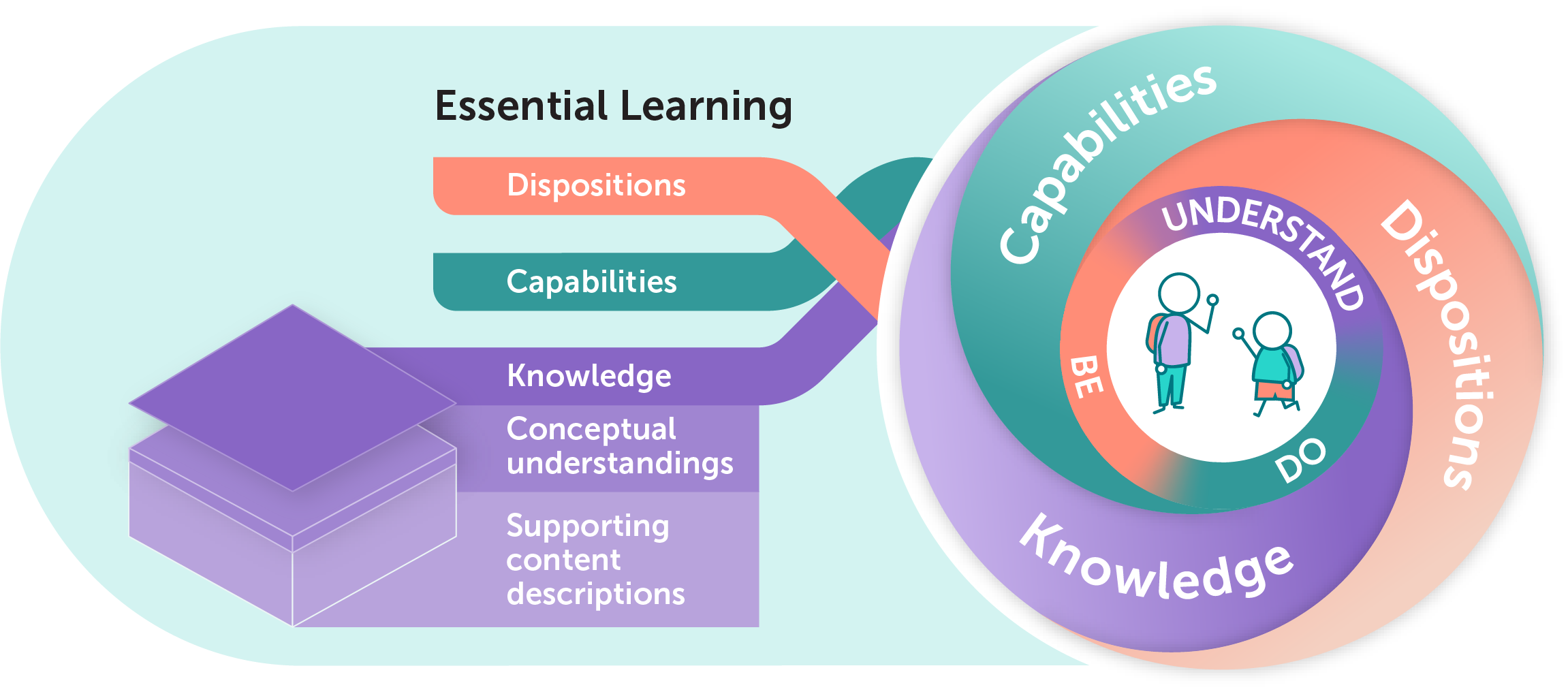
Figure 1: The dispositions, capabilities and knowledge embedded in the SA Curriculum: HPE
Learn more about the SA Curriculum Framework and its interrelated elements.
In HPE, learners activate their resilience, respect, resourcefulness and responsibility through rich experiences with movement, health and wellbeing. These dispositions shape how learners move, interact and approach relationships and responsibility. They support their success as learners and their capacity to strengthen their sense of self, to lead active, healthy and safe lives, in which they contribute meaningfully to the health and wellbeing of their communities.
Through deep engagement with physical activity, health and wellbeing, learners develop personal and social responsibility, critical thinking and inquiry, and movement. These capabilities enable learners to think independently, appreciate diverse perspectives and make constructive choices. Through ongoing reflection and meaningful application, learners strengthen their ability to apply these capabilities in unfamiliar contexts with confidence and care.
The 3 conceptual organisers, Identities, change and relationships, Influences, decisions and actions and Play and movement organise knowledge in HPE around conceptual understandings that help learners to strengthen their ability to build positive relationships, manage change and recognise influences on health behaviours. Educators use supporting content descriptions flexibly to design learning experiences in different contexts to build these conceptual understandings.
SA Curriculum: HPE 12 focus areas
The SA Curriculum: HPE must be taught through 12 focus areas.
The focus areas are used to organise learning and connect knowledge, skills and understandings that promote holistic wellbeing. They provide a framework for learners to explore how personal, social and cultural factors influence health and physical activity.
The focus areas are integrated as two strands – Personal, social and community health and Movement and physical activity – which inform and support each other. The interrelated approach supports learners prepare to lead healthy, active and fulfilling lives.
Through this focus area learners come to understand how personal decisions and social influences shape health behaviours and outcomes. Learners build knowledge about safe practices in relation to alcohol and a range of drugs.
Through this focus area learners explore how food choices relate to identity, culture and health, and learners are empowered to make informed decisions about nutrition. Learners develop understanding about the role of food and nutrition in enhancing health and wellbeing.
Through this focus area learners recognise how movement supports physical, emotional and social wellbeing, motivating lifelong participation. Learners appreciate the impact regular physical activity participation has on individual and community health and wellbeing.
Through this focus area learners develop awareness of emotional growth, resilience and the factors that support mental wellbeing and connection. Learners explore how mental health and wellbeing can be enhanced and strengthened at an individual and community level.
Through this focus area learners build understanding of self and others, appreciation of our body and the development of respectful and inclusive relationships. Learners understand physical, social and emotional changes that occur over time.
Through this focus area learners strengthen their capacity to assess risk and behave in ways that protect and support personal and community wellbeing. Learners address safety issues that they may encounter in their daily lives and develop strategies to protect their own safety and that of others.
Through this focus area learners can be physically active and develop creativity, persistence, negotiation, problem solving, planning and cooperation through inclusive play and movement experiences.
Through this focus area learners engage in both outdoor and indoor experiences that develop resilience, leadership and teamwork. Learners focus on how individuals participate in physical activities that challenge them physiologically, behaviourally and socially in diverse environments.
Through this focus area learners develop fundamental movement skills that support competent and confident participation in a range of physical activities.
Through this focus area learners enhance problem-solving, teamwork skills and fair play approaches, while deepening an understanding of rules, strategy and inclusion. Learners focus on the development of movement skills, concepts and strategies through play in a variety of games and sports.
Through this focus area learners discover lifelong engagement in play and movement experiences to support personal and collective health and wellbeing, and social connection. Learners appreciate how participation in physical activity enhances fitness and promotes wellbeing across all stages of life.
Through this focus area learners explore self-expression, cultural understanding and emotional connection through movement. They understand how movement can be composed and performed in response to equipment, beats and sounds, images, words and themes.
Learning Standards
Learning Standards describe intended learning at each band by interweaving conceptual understandings, capabilities and dispositions. They describe learning holistically in terms of understanding, doing and being (Figure 2).
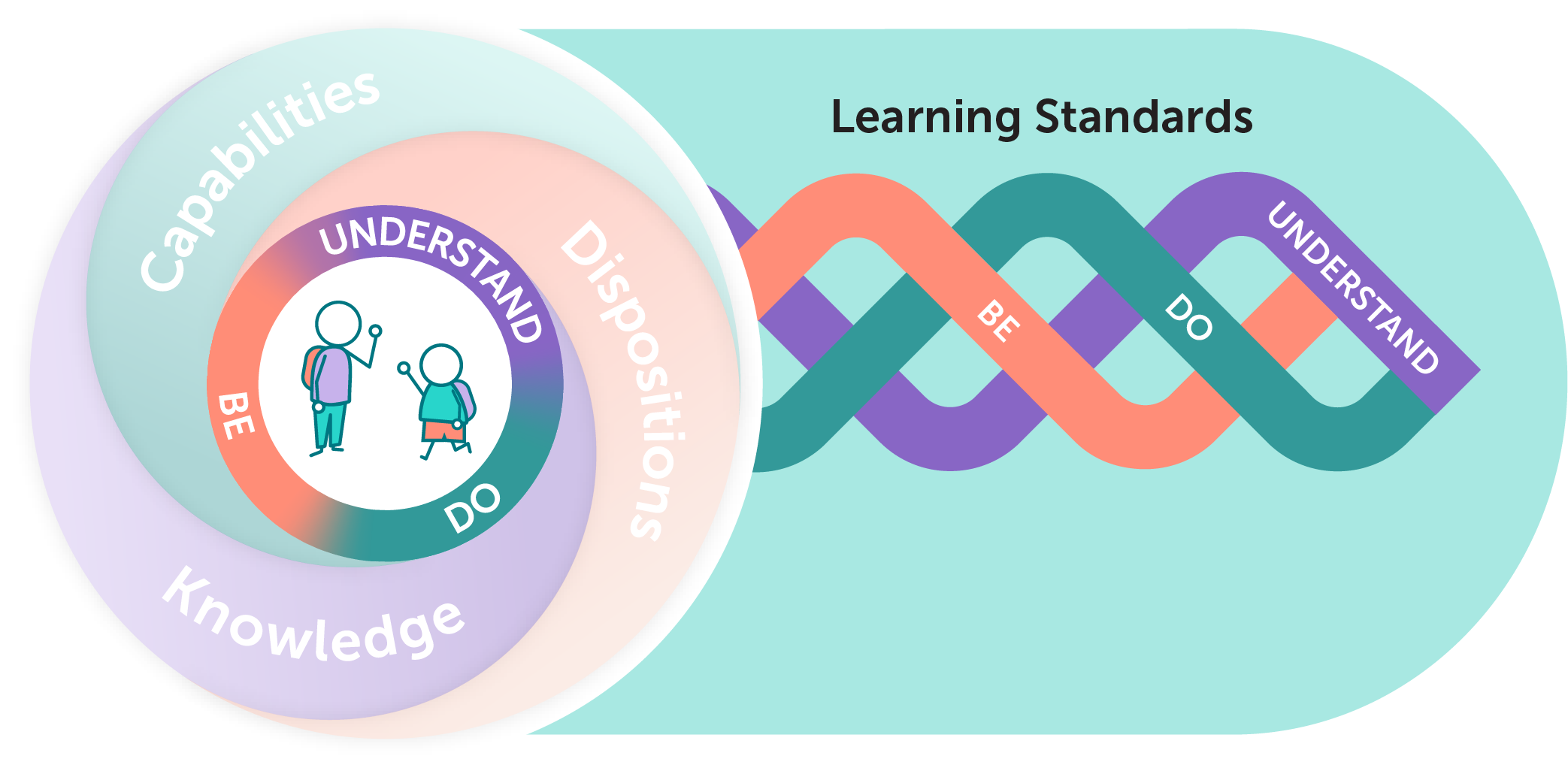
The paragraphs each represent a conceptual organiser and bring together relevant conceptual understandings, capabilities and dispositions to describe intended learning. Learning Standards are read as a whole, contributing to an integrated description of learning.
Considerations for enacting the SA Curriculum: HPE
Keeping Safe: Child Protection Curriculum
The SA Curriculum: HPE does not replace the Keeping Safe: Child Protection Curriculum (KS:CPC). The KS:CPC is mandated in all Department for Education schools. Before delivering the KS:CPC, teachers must complete the full-day KS:CPC educator course.
Meeting the rights and needs of all learners in HPE
To ensure equity, access and full participation, educators adjust movement-based learning experiences to ensure learners with disability can access learning, participate fully and achieve on the same basis as their peers.
As with other areas of learner diversity, it is crucial to acknowledge and affirm diversity in relation to sexuality and gender in health and physical education. Inclusive health and physical education programs that affirm sexuality and gender diversity acknowledge the impact of diversity on learners’ social worlds (ACARA 2024).
Structure
The SA Curriculum: HPE is organised in 2-year bands from years 1 to 10, with reception presented as a single year level.
The SA Curriculum: HPE is designed to support all learners to engage in HPE from reception to year 10 highlighting interconnections between health and physical education.
Resources
SA Curriculum: HPE
- HPE R to 10 (Oct 2026) (PDF 905 KB)
- Conceptual understandings HPE R to 10 (Oct 2026) (PDF 256 KB)
- Conceptual understandings HPE R to 10 (Oct 2026) vertical display (PDF 406 KB)
Past curriculum versions are available on the curriculum updates page.
- Child protection and wellbeing (login required)
- Menstrual hygiene health support for children and young people
- Period products funding for schools (login required)
- Respectful relationships education (login required)
- Sexual health education for students (login required)
- THINK! Road Safety