
Why Mathematics
Mathematics is a universal language that communicates across cultures and contexts. By thinking and working mathematically, we learn to recognise, explore and describe patterns and connections we see in our world. This equips us to predict, problem solve and make sound decisions. In the process, we build resilience and reflective habits, enabling us to interpret and engage confidently with challenges in both familiar and unfamiliar settings.
The nature of learning in Mathematics
In Mathematics, learners engage with ideas critically and constructively, and cultivate an appreciation of the elegance and power of mathematical reasoning. They explore problems from familiar and mathematical contexts that invite exploration.
Learners cultivate an appreciation for representing and investigating situations involving meaningful contexts, and apply mathematical thinking to interpret and evaluate their own findings. Through planning, persistence and adaptation, learners develop strategic competence, alongside a robust repertoire of flexible and efficient mathematical strategies with confidence and purpose.
Learning in Mathematics nurtures an appreciation for rich diversity of concepts to build connections across ideas, representations and an understanding of how and why mathematics helps us interpret and respond to the world. At the heart of this learning is compassion and inclusivity: learners use thinking time and structured discourse to explain and justify strategies, listen to others, refine their inductive and deductive reasoning and form meaningful perspectives for their futures.
Essential Learning
Essential Learning identifies the dispositions, capabilities and knowledge that matter most in Mathematics. Together, these interdependent dimensions support learners to deepen their understanding and apply what they learn in different contexts (Figure 1).
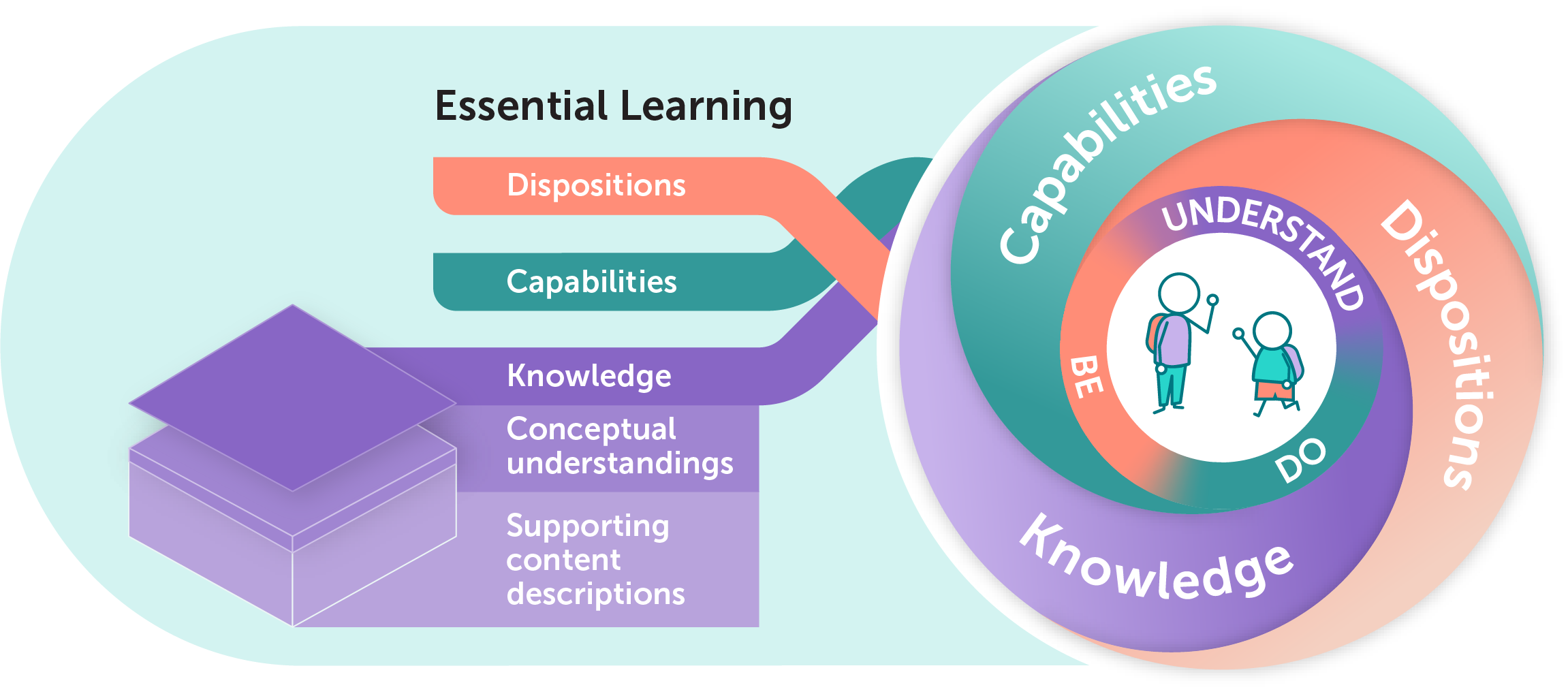
Figure 1: The dispositions, capabilities and knowledge embedded in the SA Curriculum: Mathematics
Learn more about the SA Curriculum Framework and its interrelated elements.
In Mathematics, learners activate their resilience, resourcefulness and reflectiveness through rich and meaningful learning experiences that are intentionally designed with achievable challenges and multiple solution paths. These dispositions shape how learners investigate areas of interest, draw on their knowledge and skills, and choose strategies flexibly. They shape how learners inquire, interpret, communicate and respond thoughtfully. They support their success as learners and their capacity to live well, build relationships and contribute meaningfully to their communities.
Through deep engagement with strategic problem solving, fluency and flexibility, and reasoning learners develop their understanding of mathematics. These capabilities empower learners to think independently and work mathematically as they explore ideas, make connections and make constructive choices. Through ongoing reflection, practice and meaningful application, learners strengthen their capabilities in unfamiliar contexts with confidence and care.
The 6 conceptual organisers, Number, Algebra, Measurement, Space, Statistics and Probability, organise knowledge in Mathematics around conceptual understandings that enable learners to think, reason, problem-solve and communicate beyond mathematical tasks. Educators use supporting content descriptions flexibly to design learning experiences in different contexts to build these conceptual understandings.
Mathematical processes
Mathematical processes refer to the thinking, reasoning, communicating, problem-solving and investigation process skills involved in working mathematically. Opportunities to learn process skills, including mathematical modelling, computational thinking, the statistical investigation process, and probability experiments and simulations, have been embedded into Mathematics.
More information about each of the mathematical processes can be found in the ACARA diagrams below, and on the Australian Curriculum website:


Learning Standards
Learning Standards describe intended learning at each year level by interweaving conceptual understandings, capabilities and dispositions. They describe learning holistically in terms of understanding, doing and being (Figure 2).
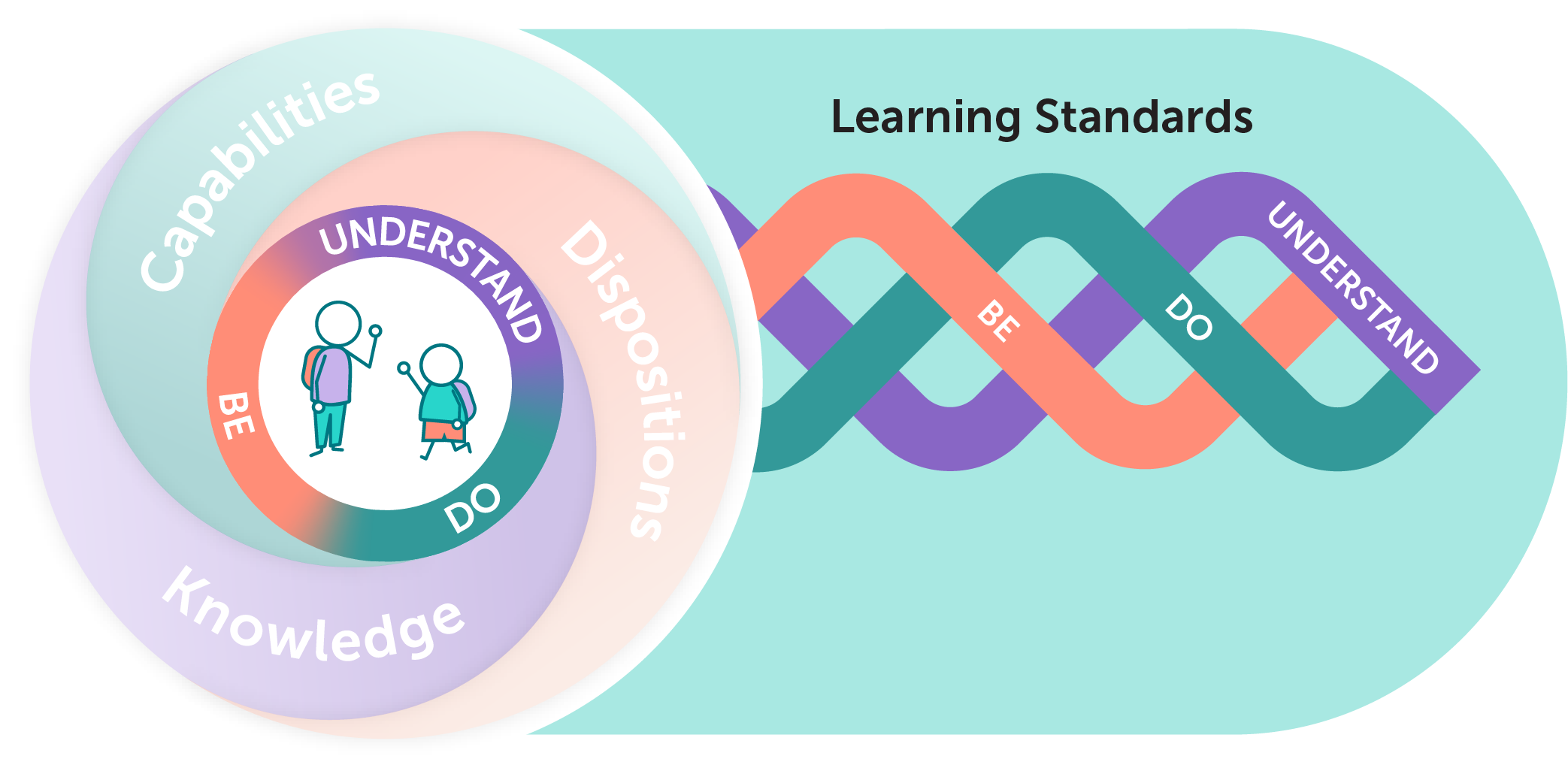
The paragraphs each represent a conceptual organiser and bring together relevant conceptual understandings, capabilities and dispositions to describe intended learning. Learning Standards should be read as a whole, with sentences and paragraphs contributing to an integrated description of learning.
Considerations for enacting the SA Curriculum: Mathematics
Keeping Safe: Child Protection Curriculum
Mathematics learning intersects with relevant aspects of the Keeping Safe: Child Protection Curriculum (KS:CPC) when appropriate.
Structure
The SA Curriculum: Mathematics is designed for all learners to engage in Mathematics from reception to year 10.
Resources
SA Curriculum: Mathematics
- Mathematics R to 10 (Oct 2026) (PDF 1 MB)
- Conceptual understandings Mathematics R to 10 (Oct 2026) (PDF 516 KB)
- Conceptual understandings Mathematics R to 10 (Oct 2026) vertical display (PDF 511 KB)
Past curriculum versions are available on the curriculum updates page.
- Financial Literacy (login required)