
Why Languages
Languages fulfil our human desire to communicate and relate. They invite us to interpret, create and share our stories. Languages belong to people, cultures and places, and shape who we are.
Learning through Languages opens our minds to diverse perspectives, understandings and ways of interacting. Through Languages we become more respectful and responsive communicators.
The nature of learning in Languages
In Languages learners engage constructively with the knowledge and experiences of the languages they hear, see or use in their lives. They are encouraged to share this in a supportive environment to explore and grow their linguistic and cultural identity, enhancing a sense of belonging, wellbeing and purpose in our multilingual and multicultural society.
Learners listen deeply and speak and read languages with curiosity and care. They are invited to draw on and make connections between multiple languages to make meaning and express themselves. They communicate in ways that matter and build their own responsive and flexible practices for use within the daily contexts of where they live, learn and play.
Learning in Languages nurtures an appreciation for the rich diversity of everyday communication, perspectives and ways of interacting. Learners move from the classroom to purposeful community-based learning and experience how languages are a meaningful way to build relationships and expand a world view. At the heart of this learning is compassion and inclusivity: learners listen to different perspectives, value diverse voices and foster empathy for the diverse ways that people communicate and live.
Essential Learning
Essential Learning identifies the dispositions, capabilities and knowledge that matter most in Languages. Together, these interdependent dimensions support learners to deepen their understanding and apply what they learn in different contexts (Figure 1).
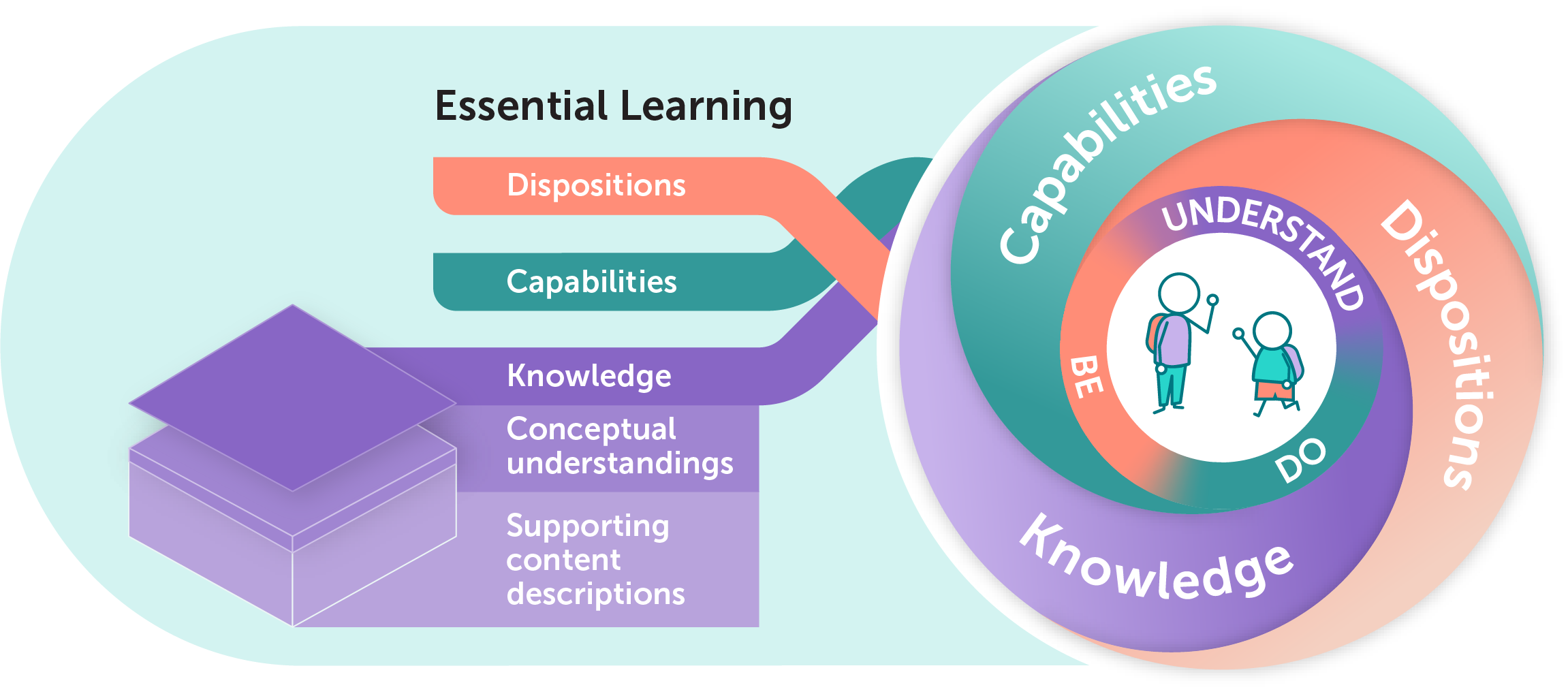
Figure 1: The dispositions, capabilities and knowledge embedded in the SA Curriculum: Languages
Learn more about the SA Curriculum Framework and its interrelated elements.
In Languages, learners activate their community-mindedness, empathy and reflectiveness through diverse and engaging intercultural experiences. These dispositions shape how learners build their linguistic and cultural identity, contextualise their language learning, value the interplay of language and culture and engage mindfully with the world around them.
Through meaningful engagement with languages and culture, learners develop self and social responsibility, multilingual thinking and intercultural communication. These capabilities enable learners to understand language systems, appreciate diverse perspective and make constructive choices. Through ongoing reflection and meaningful application, learners strengthen their ability to apply these capabilities in unfamiliar contexts with confidence and care.
The 3 conceptual organisers, Identity and belonging, Language systems and Interrelationship of language and culture, organise knowledge in Languages around conceptual understandings that help learners make meaning beyond individual topics and tasks. Educators use supporting content descriptions flexibly to design learning experiences in a range of contexts to build these conceptual understandings.
Learning Standards
Learning Standards describe intended learning at each band by interweaving conceptual understandings, capabilities and dispositions. They describe learning holistically in terms of understanding, doing and being (Figure 2).
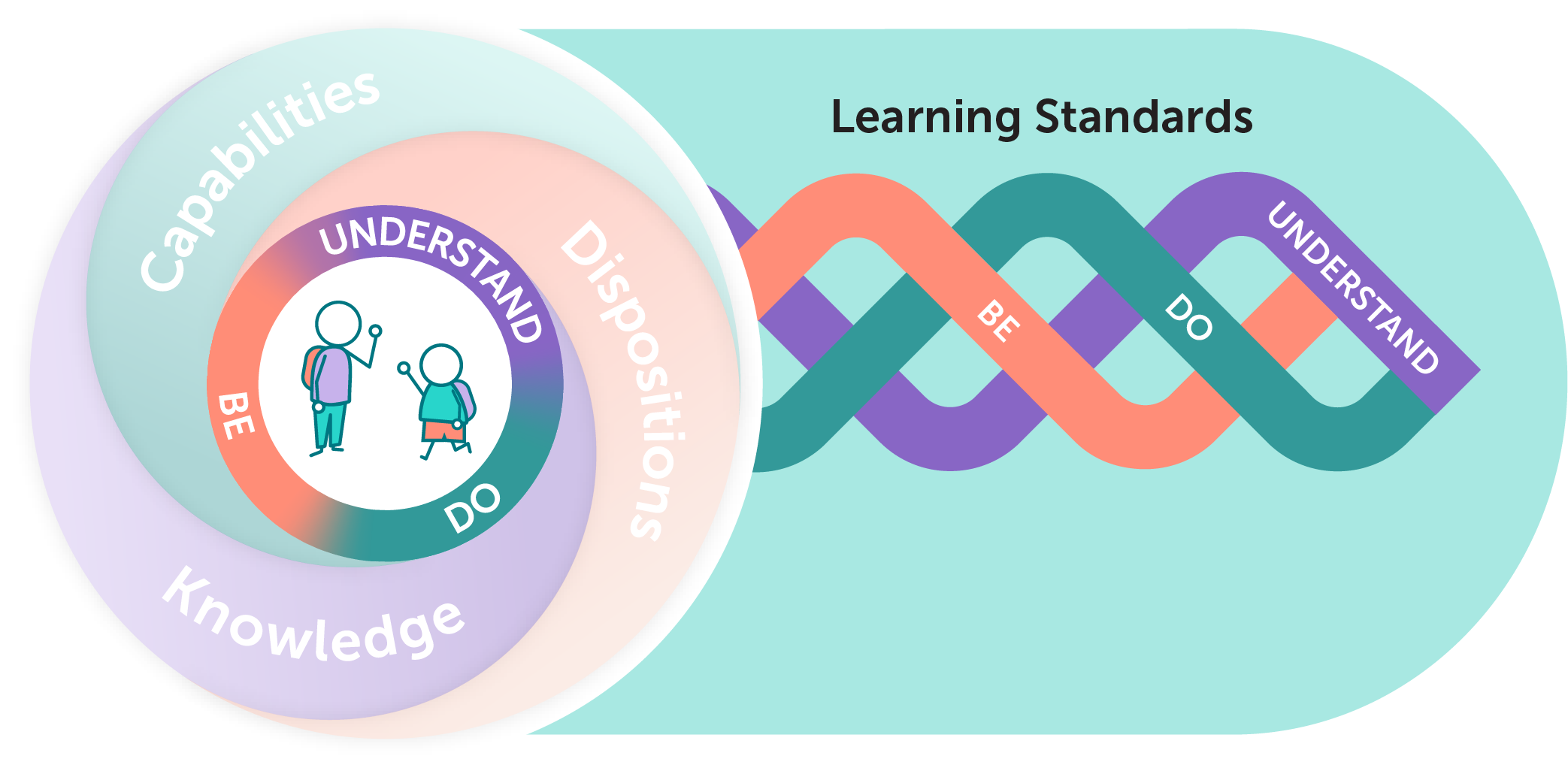
The paragraphs each represent a conceptual organiser and bring together relevant conceptual understandings, capabilities and dispositions to describe intended learning. Learning Standards should be read as a whole, with sentences and paragraphs contributing to an integrated description of learning.
Considerations for enacting the SA Curriculum: Languages
Flexible entry points and learner pathways
In South Australian public schools, year 7 Languages learners are most often taught the target language in the same class, regardless of their prior knowledge of the language. One way educators differentiate for learners is by using the reception to year 10 and years 7 to 10 (entry) sequences flexibly, to suit the diversity of language experiences within a cohort.
To better support educators to differentiate learning, the Languages curriculum incorporates the supporting content descriptions and elaborations from both reception to year 10 and years 7 to 10 sequences within each language. The sequences are presented one below the other for educators to refer to both sequences at a glance. This arrangement promotes a flexible and inclusive approach to differentiation according to learners’ prior knowledge of the target language, individual learning needs and the teaching and learning context.
The SA Curriculum: Languages recognises that learners may transition between schools and language programs multiple times during their schooling. All learners are entitled to continuity of learning through the dispositions, capabilities and knowledge described within the SA Curriculum: Languages.
Educators can create rich learning environments that represent the languages of the class and community, and model multilingual thinking while encouraging learners to draw on those languages to support learning and personal expression.
Learners of English as an additional language or dialect (EALD)
Learners of English as an additional language or dialect (EALD) bring diverse knowledge, skills and experiences through their cultural and linguistic backgrounds. Given the linguistic diversity in South Australian homes and communities, including many Aboriginal languages, EALD learners often start school with proficiency in multiple languages. They may have developed relevant concepts and skills in their first language or dialect. EALD learners require appropriate support to develop proficiency in Standard Australian English (SAE). Their language skills richly support them to learn English as a new language or dialect and become proficient in SAE and contribute to the cultures of schools and the wider Australian society.
Keeping Safe: Child Protection Curriculum
Languages learning intersects with relevant aspects of the Keeping Safe: Child Protection Curriculum (KS:CPC) when appropriate.
Structure
The SA Curriculum: Languages is designed for all learners to engage in Languages from reception to year 10.
The SA Curriculum: Languages is organised into 2-year bands from years 1 to 10, with reception presented as a single year level.
The SA Curriculum: Languages provides supporting content descriptions and language-specific elaborations from the Australian Curriculum V9 sequences:
- reception to year 10
- years 7 to 10.
For reception to year 6, the SA Curriculum: Languages includes additional supporting content developed to strengthen conceptual understandings.
Resources
SA Curriculum: Languages
- Languages R to 10 – Arabic L2 (Oct 2026) (PDF 579 KB)
- Languages R to 10 – Auslan L1 (Oct 2026) (PDF 583 KB)
- Languages R to 10 – Auslan L2 (Oct 2026) (PDF 581 KB)
- Languages R to 10 – Chinese BL L1(Oct 2026) (PDF 544 KB)
- Languages R to 10 – Chinese L2 (Oct 2026) (PDF 550 KB)
- Languages R to 10 – French L2 (Oct 2026) (PDF 585 KB)
- Languages R to 10 – German L2 (Oct 2026) (PDF 547 KB)
- Languages R to 10 – Hindi L2 (Oct 2026) (PDF 581 KB)
- Languages R to 10 – Indonesian L2 (Oct 2026) (PDF 837 KB)
- Languages R to 10 – Italian L2 (Oct 2026) (PDF 838 KB)
- Languages R to 10 – Japanese L2 (Oct 2026) (PDF 840 KB)
- Languages R to 10 – Korean L2 (Oct 2026) (PDF 839 KB)
- Languages R to 10 – Modern Greek L2 (Oct 2026) (PDF 868 KB)
- Languages R to 10 – Spanish L2 (Oct 2026) (PDF 838 KB)
- Languages R to 10 – Vietnamese L2 (Oct 2026) (PDF 838 KB)
- Conceptual understandings Languages R to 10 (Oct 2026) (PDF 246 KB)
- Conceptual understandings Languages R to 10 (Oct 2026) vertical display (PDF 246 KB)
- Conceptual understandings Auslan R to 10 Version 12 (Oct 2026) (PDF 246 KB)
- Conceptual understandings Auslan R to 10 Version 1 (Oct 2026) vertical display (PDF 246 KB)
Past curriculum versions are available on the curriculum updates page
Scope and sequence curriculum documents for Aboriginal languages are in development in collaboration with language owners. For information about or support for teaching and learning Aboriginal languages, contact: Education.AboriginalLanguages@sa.gov.au
Australian Curriculum language support resources
The Australian Curriculum provides language support resources to support educators as they plan learning and teaching that meets the diverse language needs of students at different entry points into language learning.
Each language resource provides suggestions for sequential development in 2 parts:
- Part 1 – language structures and features
Part 1 provides language structures and features that are neither exhaustive nor mutually exclusive. The 3 levels demonstrate how a particular structure or feature could be developed at different stages of a continuum of language learning.
- Part 2 – thematic contexts for language use
Part 2 provides examples of thematic contexts for language use. They are designed to give educators ideas about how to support a progression of learning related to contexts and concepts of language use. Educators are encouraged to adapt these to allow for student agency and to meet the abilities, backgrounds, interests and needs of their students, using the approaches, methodologies and pedagogies that best suit their students’ learning.
Content in both parts is presented in 3 broad levels – beginner, intermediate and advanced – and is independent of the year bands and sequences in the curriculum, the language-learner background and the time spent on tasks.
For more information about the curriculum pathways and sequences for each language, and for a link to the relevant ACV9 Language Support Resource, open the language tabs below.
About Arabic
The SA Curriculum: Languages – Arabic refers to Modern Standard Arabic.
Learners of Arabic
Learners of Arabic in South Australian schools have a range of linguistic and cultural experiences. For some learners, this is their first experience learning Arabic, while others may have existing connections to Arabic languages, dialects and cultures as background speakers, and others may identify with or use Arabic as a mother tongue.
Curriculum pathway
The SA Curriculum: Languages – Arabic has been developed to meet the needs of learners with a range of linguistic experiences, those with a background in Arabic as well as those learning Arabic as a second or additional language.
Learning sequences
The SA Curriculum: Languages – Arabic presents the supporting content descriptions and elaborations from both reception to year 10 and years 7 to 10 sequences together, one below the other. This arrangement promotes a flexible and inclusive approach to differentiation according to learners’ prior knowledge of Arabic, individual learning needs, and the teaching and learning context.
Languages support resource
The resource may assist educators to meet the diverse language needs and learning backgrounds of learners at different entry points into language learning.
About Auslan
Auslan (Australian Sign Language) is the language of the Deaf community of Australia. Signed languages have the same function as spoken languages in meeting the communicative, cognitive and social needs of users.
Auslan is a visual-gestural language with a complete set of linguistic structures and features. Auslan has its own grammar, lexicon, history and culture. It is not based on English, although it is influenced by it.
Within Auslan there are 2 main dialects: a Southern dialect generally used in South Australia, Victoria, Western Australia and the Northern Territory, and a Northern dialect generally used in New South Wales, the Australian Capital Territory and Queensland.
Learners of Auslan
Learners of Auslan in South Australian schools have a range of linguistic and cultural experiences. For some students, this is their first experience of learning Auslan, while others may have existing connections to sign languages and Deaf or Hard of hearing communities, and others may identify with or use Auslan as a first or preferred language.
Curriculum pathways
The SA Curriculum: Languages – Auslan has been developed to cater for the diversity of students learning Auslan with both first-language (L1) and second-language (L2) pathways. Learners may be deaf, hard of hearing or hearing, and may be learning Auslan as a first language or as a second or additional language.
- The L1 pathway typically caters for deaf students whose native language is Auslan. These students may be deaf children of deaf parents or carers, deaf children of hearing families or carers who use Auslan at home or hearing children with signing deaf parents or carers. They may also be deaf students who are introduced to Auslan at school and may not have access to Auslan at home.
- The L2 pathway typically caters for learners who are not members of the Deaf community. These students are mostly hearing students learning Auslan as a second or additional language. Learners may also include deaf or hard of hearing children who use another signed language, as in the case of a recent immigrant, or hard of hearing children who have residual hearing or access to speech.
Learning sequences
Each pathway presents the supporting content descriptions and elaborations from both reception to year 10 and years 7 to 10 sequences together, one below the other. This arrangement promotes a flexible and inclusive approach to differentiation according to learners’ prior knowledge of Auslan, individual learning needs, and the teaching and learning context. Schools and teachers choose language-learning pathways or sequences, including content from across pathways, to best suit the needs of their learners.
Protocols
In introducing an Auslan program in contextually and culturally sensitive and appropriate ways, it is recommended that schools consider:
- engagement and consultation with local, regional or state Deaf community groups, as available to the school
- the proportion of learners in the school identifying directly with Auslan
- the appropriate pathways and sequences, or combinations of these, that might apply in their school context for deaf, hard of hearing and hearing learners
- the opportunities for real-world contexts for learning Auslan
- the availability of appropriate school staff, community members and resources for developing and teaching Auslan.
Languages support resource
The resource may assist educators to meet the diverse language needs and learning backgrounds of students at different entry points into language learning.
About Chinese
SA Curriculum: Languages – Chinese refers to Modern Standard Chinese (Mandarin), Pinyin Romanisation and simplified characters. As simplified and traditional (full form) Chinese characters are used in the media, education and in print, learners may develop some knowledge or awareness of both systems.
Learners of Chinese in South Australian schools have a range of linguistic and cultural experiences. For some learners, this is their first experience of learning Chinese, while others may have existing connections to Chinese languages (such as Cantonese, Hokkien or Teo-chiu) and cultures, and others may identify with or use Mandarin Chinese as a mother tongue. Some learners may have prior experience learning traditional characters, while others may have prior learning of simplified characters at home, in community schools or through formal education.
Curriculum pathways
The SA Curriculum: Languages – Chinese has been developed to cater for the diversity of students learning Chinese with 3 learner pathways: the background-language learner pathway (BL), the first-language learner pathway (L1) and the second-language learner pathway (L2).
- The background-language learner pathway typically caters for learners who use Mandarin Chinese or varieties of Chinese at home, not necessarily exclusively, and have varying degrees of knowledge of and proficiency in Chinese.
- The first-language learner pathway typically caters for learners who use or identify with Mandarin Chinese as their mother tongue and use Chinese for primary socialisation or education or literacy development.
- The second-language learner pathway typically caters for those learning Chinese as a second or additional language.
Learning sequences
The background-language learner pathway and first-language learner pathway have a common 7 to 10 sequence with differentiated elaborations. The SA Curriculum: Languages – Chinese presents these 2 pathways in the one document, with the common years 7 to 10 sequence. This arrangement promotes a flexible and inclusive approach to differentiation according to learners’ prior knowledge of Chinese, individual learning needs, and the teaching and learning context. Schools and educators choose language-learning pathways or sequences, including content from across pathways, to best suit the needs of their learners.
The Chinese second-language learner pathway presents the supporting content descriptions and elaborations from both reception to year 10 and years 7 to 10 sequences together, one below the other.
Languages support resource
The resource may assist educators to meet the diverse language needs and learning backgrounds of students at different entry points into language learning.
Learners of French
Learners of French in South Australian schools have a range of linguistic and cultural experiences. For some learners, this is their first experience of learning French, while others may have existing connections to French as background speakers of the language.
Curriculum pathway
SA Curriculum: Languages – French is the second-language learner pathway (L2) and caters for those learning French as a second or additional language.
Learning sequences
The SA Curriculum: Languages – French presents the supporting content descriptions and elaborations from both reception to year 10 and years 7 to 10 sequences together, one below the other. This arrangement promotes a flexible and inclusive approach to differentiation according to learners’ prior knowledge of French, individual learning needs, and the teaching and learning context.
Languages support resource
The resource may assist educators to meet the diverse language needs and learning backgrounds of students at different entry points into language learning.
Learners of German
Learners of German in South Australian schools have a range of linguistic and cultural experiences. For some learners, this is their first experience of learning German, while others may have existing connections to German as background speakers of the language.
Curriculum pathway
SA Curriculum: Languages – German is the second-language learner pathway (L2) and caters for those learning German as a second or additional language.
Learning sequences
The SA Curriculum: Languages – German presents the supporting content descriptions and elaborations from both reception to year 10 and years 7 to 10 sequences together, one below the other. This arrangement promotes a flexible and inclusive approach to differentiation according to learners’ prior knowledge of German, individual learning needs, and the teaching and learning context.
Languages support resource
The resource may assist educators to meet the diverse language needs and learning backgrounds of students at different entry points into language learning.
Learners of Hindi
Learners of Hindi in South Australian schools have a range of linguistic and cultural experiences. For some learners, this is their first experience of learning Hindi, while others may have existing connections to Hindi as background speakers, and others may identify with or use Hindi as a mother tongue.
Curriculum pathway
SA Curriculum: Languages – Hindi has been developed to meet the needs of learners with a background in Hindi as well as those learning Hindi as a second or additional language.
Learning sequences
SA Curriculum: Languages – Hindi presents the supporting content descriptions and elaborations from both reception to year 10 and years 7 to 10 sequences together, one below the other. This promotes a flexible and inclusive approach to differentiation according to learners’ prior knowledge of Hindi, individual learning needs, and the teaching and learning context.
Languages support resource
The resource may assist educators to meet the diverse language needs and learning backgrounds of students at different entry points into language learning.
Learners of Indonesian
Learners of Indonesian in South Australian schools have a range of linguistic and cultural experiences. For some learners, this is their first experience of learning Indonesian, while others may have existing connections to Indonesian as background speakers of the language.
Curriculum pathway
SA Curriculum: Languages – Indonesian is the second-language learner pathway (L2) and caters for those learning Indonesian as a second or additional language.
Learning sequences
SA Curriculum: Languages – Indonesian presents the supporting content descriptions and elaborations from both reception to year 10 and years 7 to 10 sequences together, one below the other. This arrangement promotes a flexible and inclusive approach to differentiation according to learners’ prior knowledge of Indonesian, individual learning needs, and the teaching and learning context.
Languages support resource
The resource may assist educators to meet the diverse language needs and learning backgrounds of students at different entry points into language learning.
About Italian
The SA Curriculum: Languages – Italian refers to Standard Italian or italiano standard.
Learners of Italian
Learners of Italian in South Australian schools have a range of linguistic and cultural experiences. For some learners, this is their first experience of learning Italian, while others may have existing connections with Italian as background speakers of the language.
Curriculum pathway
SA Curriculum: Languages – Italian is the second-language learner pathway (L2) and caters for those learning Italian as a second or additional language.
Learning sequences
SA Curriculum: Languages – Italian presents the supporting content descriptions and elaborations from both reception to year 10 and years 7 to 10 sequences together, one below the other. This arrangement promotes a flexible and inclusive approach to differentiation according to learners’ prior knowledge of Italian, individual learning needs, and the teaching and learning context.
Languages support resource
The resource may assist educators to meet the diverse language needs and learning backgrounds of students at different entry points into language learning.
Learners of Japanese
Learners of Japanese in South Australian schools have a range of linguistic and cultural experiences. For some learners, this is their first experience of learning Japanese, while others may have existing connections to Japanese as background speakers of the language.
Curriculum pathway
SA Curriculum: Languages – Japanese is the second-language learner pathway (L2) and caters for those learning Japanese as a second or additional language.
Learning sequences
SA Curriculum: Languages – Japanese presents the supporting content descriptions and elaborations from both reception to year 10 and years 7 to 10 sequences together, one below the other. This arrangement promotes a flexible and inclusive approach to differentiation according to learners’ prior knowledge of Japanese, individual learning needs, and the teaching and learning context.
Languages support resource
The resource may assist educators to meet the diverse language needs and learning backgrounds of students at different entry points into language learning.
Learners of Korean
Learners of Korean in South Australian schools have a range of linguistic and cultural experiences. For some learners, this is their first experience of learning Korean, while others may have existing connections to Korean as background speakers of the language.e.
Curriculum pathway
SA Curriculum: Languages – Korean is the second-language learner pathway (L2) and caters for those learning Korean as a second or additional language.
Learning sequences
SA Curriculum: Languages – Korean presents the supporting content descriptions and elaborations from both reception to year 10 and years 7 to 10 sequences together, one below the other. This arrangement promotes a flexible and inclusive approach to differentiation according to learners’ prior knowledge of Korean, individual learning needs, and the teaching and learning context.
Languages support resource
The resource may assist educators to meet the diverse language needs and learning backgrounds of students at different entry points into language learning.
Learners of Modern Greek
Learners of Modern Greek (Greek) in South Australian schools have a range of linguistic and cultural experiences. For some learners, this is their first experience of learning Greek, while others may have existing connections to Greek as background speakers of the language.
Curriculum pathway
SA Curriculum: Languages – Modern Greek is the second-language learner pathway (L2) and has been developed to meet the needs of those learning Greek as a second or additional language.
Learning sequences
SA Curriculum: Languages – Greek presents the supporting content descriptions and elaborations from both reception to year 10 and years 7 to 10 sequences together, one below the other. This arrangement promotes a flexible and inclusive approach to differentiation according to learners’ prior knowledge of Greek, individual learning needs, and the teaching and learning context.
Languages support resource
The resource may assist educators to meet the diverse language needs and learning backgrounds of students at different entry points into language learning.
Learners of Spanish
Learners of Spanish in South Australian schools have a range of linguistic and cultural experiences. For some learners, this is their first experience of learning Spanish, while others may have existing connections to Spanish as background speakers of the language.
Curriculum pathway
SA Curriculum: Languages – Spanish is the second-language learner pathway (L2) and caters for those learning Spanish as a second or additional language.
Learning sequences
SA Curriculum: Languages – Spanish presents the supporting content descriptions and elaborations from both reception to year 10 and years 7 to 10 sequences together, one below the other. This arrangement promotes a flexible and inclusive approach to differentiation according to learners’ prior knowledge of Spanish, individual learning needs, and the teaching and learning context.
Languages support resource
The resource may assist educators to meet the diverse language needs and learning backgrounds of students at different entry points into language learning.
Learners of Vietnamese
Learners of Vietnamese in South Australian schools have a range of linguistic and cultural experiences. For some learners, this is their first experience of learning Vietnamese, while others may have existing connections to Vietnamese as background speakers, and others may identify with or use Vietnamese as a mother tongue.
Curriculum pathway
SA Curriculum: Languages – Vietnamese has been developed to cater for learners with a background in Vietnamese as well as those learning Vietnamese as a second or additional language.
Learning sequences
SA Curriculum: Languages – Vietnamese presents the supporting content descriptions and elaborations from both reception to year 10 and years 7 to 10 sequences together, one below the other. This promotes a flexible and inclusive approach to differentiation according to learners’ prior knowledge of Vietnamese, individual learning needs, and the teaching and learning context.
Languages support resource
The resource may assist educators to meet the diverse language needs and learning backgrounds of students at different entry points into language learning.