
Why Technologies
Technologies learning cultivates curiosity, creativity and resilience by equipping us to think, make and innovate. Through applying design, systems and computational thinking, we learn how people, technologies and environments shape one another. In Technologies we solve problems with empathy and imagination, acting ethically and collaboratively to create sustainable, preferred futures.
The nature of learning in Technologies
In Technologies, learners engage with ideas critically and constructively. By exploring how things work, understanding systems and considering user needs, they develop insights into the complex relationships between people, technologies and their environments.
Learners listen deeply and approach opportunities, problems and real-world issues with curiosity and care. They communicate in meaningful ways as they create digital solutions, investigate, build and test ideas. As learners develop these skills, they strengthen their capacity to make meaning, respond to the world and contribute with confidence and purpose.
Learning in Technologies nurtures an appreciation for the rich diversity of innovation and sustainable systems. Learners move from the classroom to their local community, the built world and the environment. At the heart of this learning is compassion and inclusivity: learners listen to different experiences, capture user stories, value diverse voices, and question their assumptions. Through these experiences, learners discover how language shapes meaning, influences perspectives and opens possibilities for their futures.
Essential Learning
Essential Learning identifies the dispositions, capabilities and knowledge that matter most in Technologies. Together, these interdependent dimensions support learners to deepen their understanding and apply what they learn in different contexts (Figure 1).
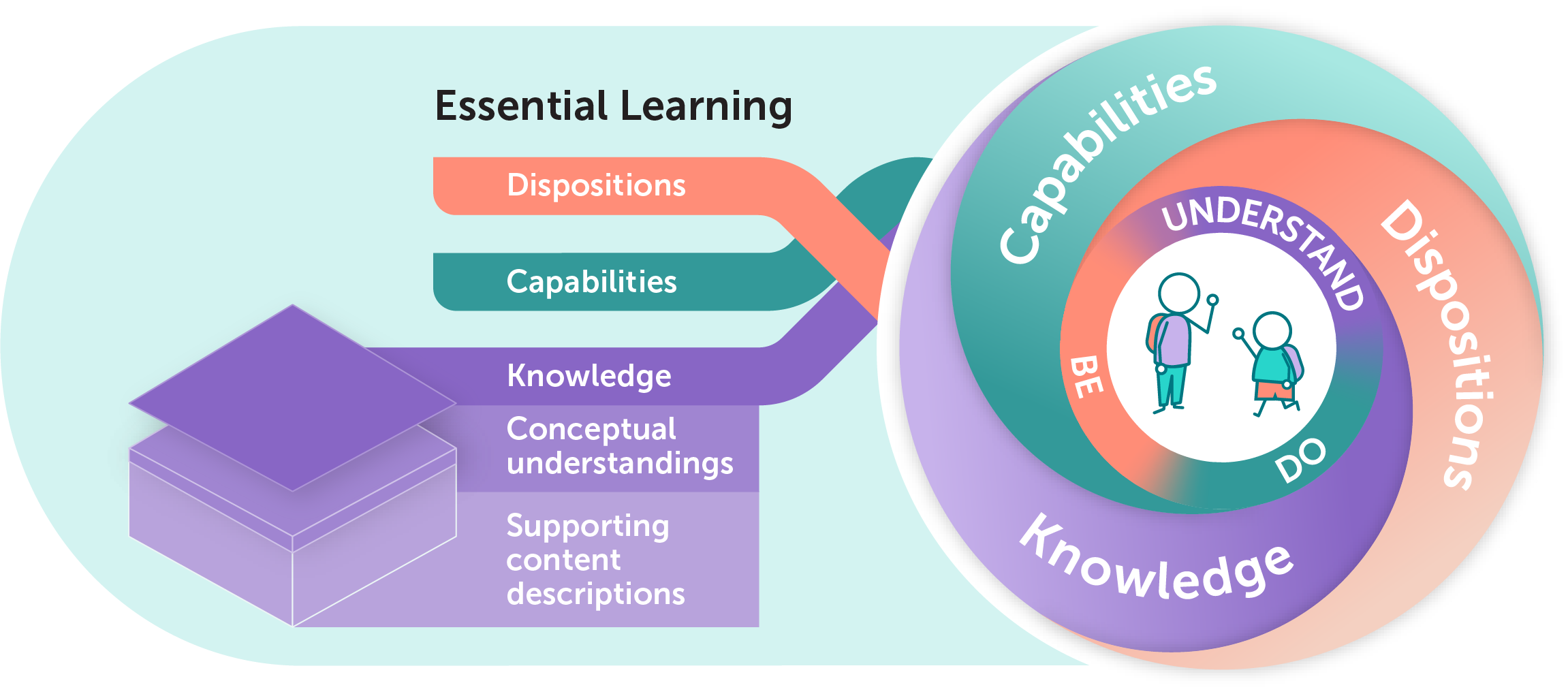
Figure 1: The dispositions, capabilities and knowledge embedded in the SA Curriculum: Technologies
Learn more about the SA Curriculum Framework and its interrelated elements.
In Technologies, learners activate their empathy, curiosity, creativity and resilience through rich experiences with innovation, product design, stakeholder engagement and user experience. These dispositions shape how learners inquire, interpret, communicate and respond thoughtfully. They support their success as learners and their capacity to live well, build relationships and contribute meaningfully to their communities.
Through deep engagement and the application of design, systems and computational thinking, learners develop innovation, production and implementation, ethical practices, local and global citizenship, collaboration and management capabilities. These capabilities enable learners to think independently, appreciate diverse perspectives and make constructive choices. Through ongoing reflection and meaningful application, learners strengthen their ability to apply these capabilities in unfamiliar contexts with confidence and care.
The 4 conceptual organisers, People and systems, Data and information, Thinking and making and Interaction and impacts, organise knowledge in Technologies around conceptual understandings that help learners make meaning beyond existing digital solutions. Educators use supporting content descriptions flexibly to design learning experiences in different contexts to build these conceptual understandings.
Thinking in Technologies
Design thinking, systems thinking and computational thinking are embedded within the Essential Learning in the SA Curriculum: Technologies.
Design thinking is a human-centred approach that focuses on empathising with users, defining problems, ideating solutions, prototyping and testing.
Learners select solutions according to a co-developed design brief that identifies constraints. Through collaboration and experimentation, learners create practical, user-friendly solutions. Design thinking considers sustainability including the impact of design decisions on people and environments.
See the Design thinking diagram on the Australian Curriculum website.
Systems thinking is an analytical approach that views problems holistically, recognising the interconnectedness of various components within a system.
It allows learners to see the ways interactions between systems and within systems impact on solutions, and enables them to identify patterns, analyse relationships and consider long-term effects. Learners explore multiple perspectives and can effectively address complex, multifaceted problems. Systems thinking supports learners to understand the ethical implications of design decisions and envisage more inclusive solutions.
See the Systems thinking diagram on the Australian Curriculum website.
Computational thinking is a problem-solving process used to break down complex challenges into manageable parts, create step-by-step processes and simplify solutions through abstraction.
It enables learners to think logically and systematically, methodically addressing design problems, and develop precision skills in user-interface design. It helps learners develop efficient algorithms to develop, test and refine digital solutions. Applying computational thinking enables learners to model, experiment and simulate safely in a digital environment. Through understanding the ways in which digital systems are built and used, learners develop agency over the ways they interact, make ethical decisions and build with digital tools.
See the Computational thinking diagram on the Australian Curriculum website.
Learning Standards
Learning Standards describe intended learning at each band by interweaving conceptual understandings, capabilities and dispositions. They describe learning holistically in terms of understanding, doing and being (Figure 2).
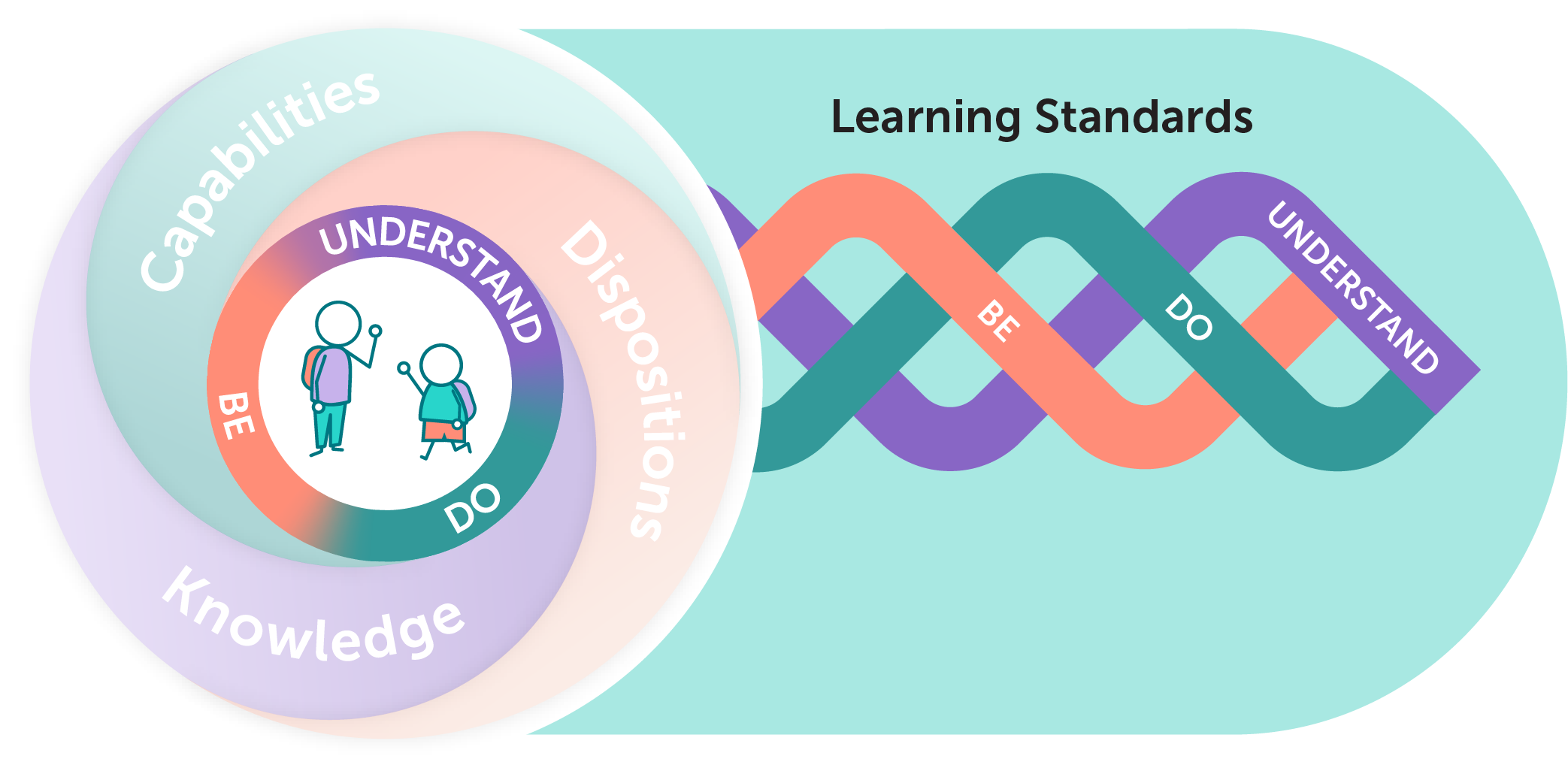
The paragraphs each represent a conceptual organiser and bring together relevant conceptual understandings, capabilities and dispositions to describe intended learning. Learning Standards should be read as a whole, with sentences and paragraphs contributing to an integrated description of learning.
Considerations for enacting the SA Curriculum: Technologies
Keeping Safe: Child Protection Curriculum
Technologies learning intersects with relevant aspects of the Keeping Safe: Child Protection Curriculum (KS:CPC) when appropriate.
Structure
The SA Curriculum: Technologies is organised with reception as a single year level and years 1 to 10 in 2-year bands.
The SA Curriculum: Technologies is designed for all learners to engage in both Technologies subjects from reception to year 10.
The Technologies curriculum has 2 distinct but connected subjects:
- Design and Technologies
- Digital Technologies
There are 4 focus areas, which replace the 4 ‘technologies contexts’ of the Australian Curriculum.
In Design and Technologies, learners:
- create 3 types of designed solutions over a 2-year band from years 1 to 8 in the form of either prototypes or polished solutions:
- Product – a physical or tangible item that meets a need or demand
- Service – a less tangible system or set of practices that supports others to live well or make decisions
- Environment – a real or virtual space or place that provides the conditions, influences and context in which an organism, system or activity operates.
- explore 4 focus areas in combination or individually, depending on their band. Focus areas are included in the conceptual understandings for each band:
- Food and fibre production
- Food specialisations
- Engineering principles and systems
- Materials and technologies specialisations.
Learners explore all 4 focus areas by the end of each band in years 1 to 8. This provides learners with opportunities to transfer their thinking and skills from one context to another, which is essential for developing deep conceptual understandings.
In Digital Technologies, learners develop understandings of how the devices they interact with work; how they were imagined, created and implemented to provide a variety of digital experiences.
Learners apply the fundamentals of computer science as they work with coding environments to create digital solutions. They learn to collect, organise and manage data sets to inform decision making, recognising that data can be biased. Understanding the human–system interactions that characterise digital development support learners to become skilled and compassionate designers of digital applications, services and solutions.
Resources
SA Curriculum: Design and Technologies
- Design and Technologies R to 10 (Oct 2026) (PDF 1 MB)
- Conceptual understandings Design and Technologies R to 10 (Oct 2026) (PDF 259 KB)
- Conceptual understandings Design and Technologies R to 10 (Oct 2026) vertical display (PDF 261 KB)
SA Curriculum: Digital Technologies
- Digital Technologies R to 10 (Oct 2026) (PDF 1 MB)
- Conceptual understandings Digital Technologies R to 10 (Oct 2026) (PDF 261 KB)
- Conceptual understandings Digital Technologies R to 10 (Oct 2026) vertical display (PDF 411 KB)
Past curriculum versions are available on the curriculum updates page.