
Why Humanities and Social Sciences
Learning in Humanities and Social Sciences helps us understand our identity and place in the world by making connections across time and place. Exploring the diversity of human experiences, cultures, values and environments fosters curiosity and critical insight, empowering us to collaborate and share, and embrace our role as responsible citizens.
The nature of learning in HASS
In HASS learners generate and engage with questions critically and constructively – tracing historical ideas and developments, geographical environments and phenomena, civic values and economic systems – to enter different worlds and untangle the complexities of human experience and the environment.
Learners analyse, evaluate and interpret information, narratives and viewpoints with curiosity and care. Working together, they share ideas, challenge assumptions, develop their understanding, and consider cultural and ethical implications. Learning in HASS nurtures an appreciation for the social, environmental, economic and ethical impacts of decisions, exploring possible actions, and communicating ideas in varied ways for multifaceted audiences. At the heart of this learning is compassion and inclusivity: learners build the confidence and ability to participate actively in society and contribute to a fairer and more sustainable future.
Essential Learning
Essential Learning identifies the dispositions, capabilities and knowledge that matter most in HASS. Together, these interdependent dimensions support learners to deepen their understanding and apply what they learn in different contexts (Figure 1).
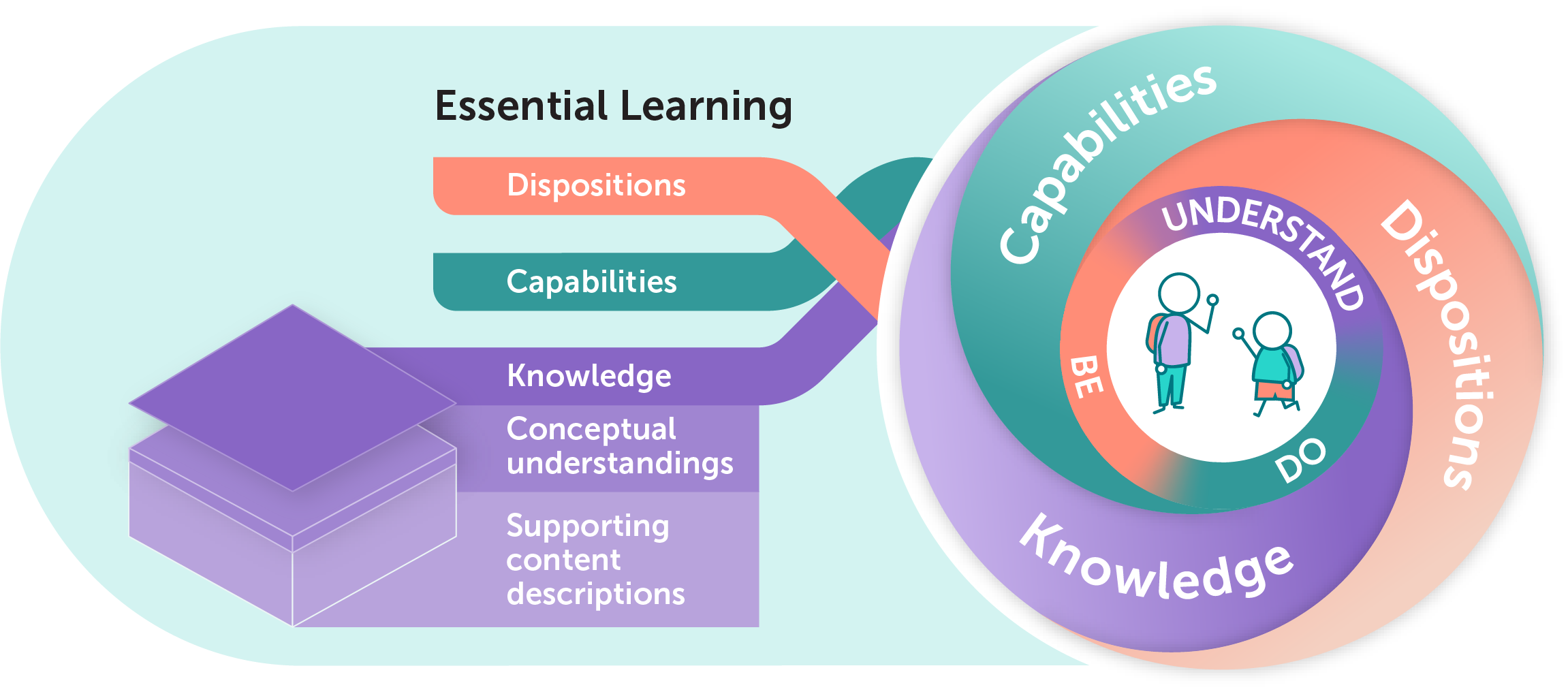
Figure 1: The dispositions, capabilities and knowledge embedded in the SA Curriculum: HASS
Learn more about the SA Curriculum Framework and its interrelated elements.
In HASS, learners activate their curiosity, empathy and sense of responsibility through rich opportunities to explore and engage with diverse HASS content and contexts. These dispositions shape how learners investigate, interpret, communicate and respond thoughtfully. They support their success as learners to exercise responsible agency, participate as active citizens and contribute to a better world, now and into the future.
Through deep engagement and investigation with social, civic, economic and environmental issues, learners develop perspectives and decision making, questioning and research, evaluation, analysis and interpretation, and communication and sharing. These capabilities enable learners to think independently, appreciate diverse perspectives and make constructive choices. Through ongoing practice, reflection and meaningful application, learners strengthen their ability to apply these capabilities with confidence and care.
The 4 conceptual organisers, Identity, Change, Systems and Perspectives organise knowledge in HASS around conceptual understandings that help learners make sense of social, civic and environmental issues and take informed action. Educators use supporting content descriptions flexibly to design learning experiences in different contexts to build these conceptual understandings.
Learning Standards
Learning Standards describe intended learning at each year level by interweaving conceptual understandings, capabilities and dispositions. They describe learning holistically in terms of understanding, doing and being (Figure 2).
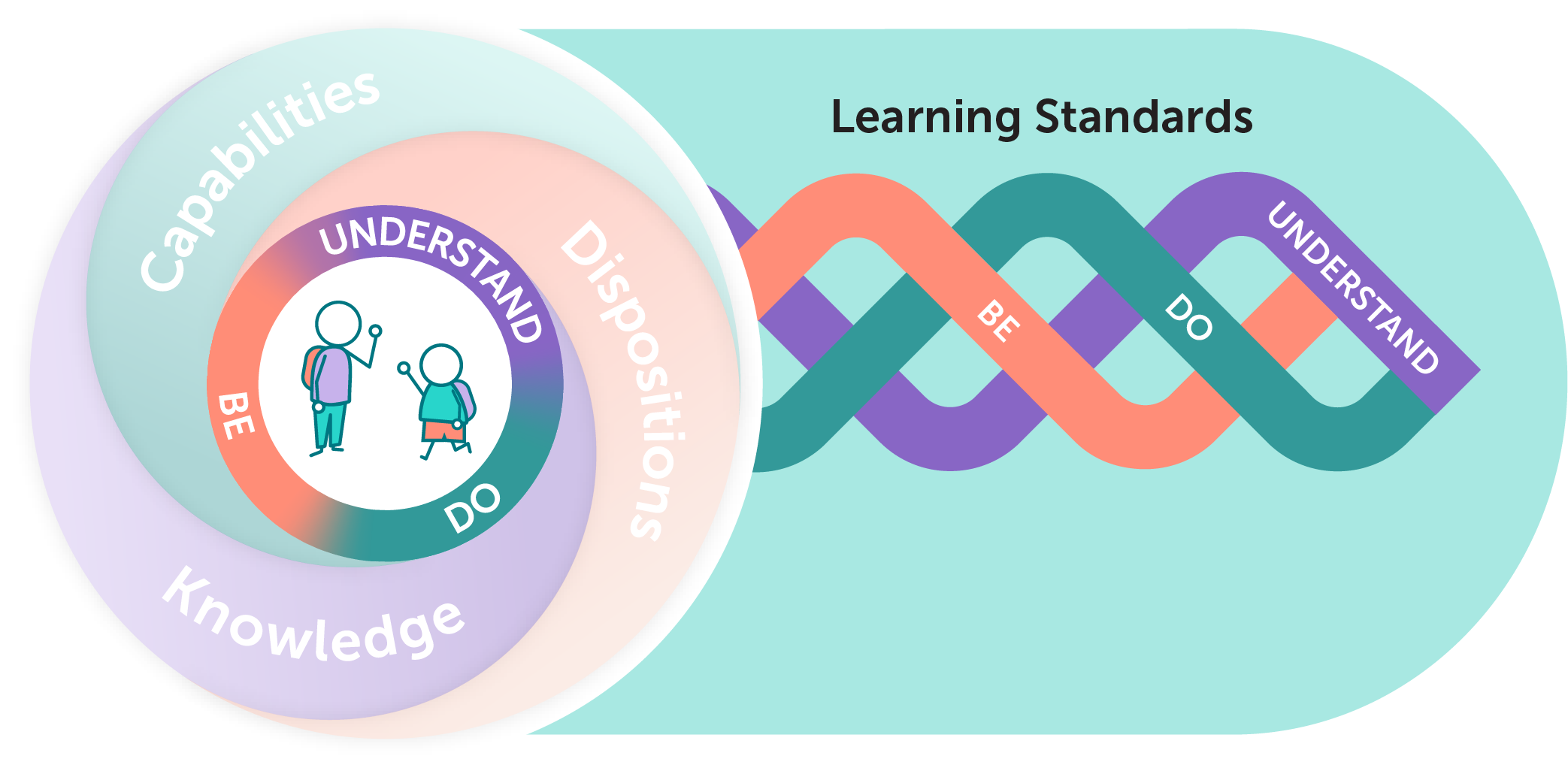
The paragraphs each represent a conceptual organiser and bring together relevant conceptual understandings, capabilities and dispositions to describe intended learning. Learning Standards should be read as a whole, with sentences and paragraphs contributing to an integrated description of learning.
Considerations for enacting the SA Curriculum: HASS
The SA Curriculum: HASS provides schools with the flexibility to develop learning programs that respond to their context. Schools can choose to form partnerships with a range of relevant industries to complement their HASS curriculum.
Keeping Safe: Child Protection Curriculum
HASS learning intersects with relevant aspects of the Keeping Safe: Child Protection Curriculum (KS:CPC) when appropriate.
Structure
The SA Curriculum: HASS is designed for all learners to engage in HASS as an integrated subject from reception to year 6, and as 4 separate subjects from years 7 to 10.
The SA Curriculum: HASS is organised into HASS R-6, History, Geography, Civics and Citizenship, and Economics and Business, with learning structured by year level. Learners engage in HASS through an integrated subject from reception to year 6, and as 4 separate subjects from years 7 to 10, enabling all learners to engage in HASS from reception to year 10.
HASS Primary – reception to year 6 provides learners opportunities to develop a deep understanding of their current world, how the world has changed over time, and what it could be like in the future through the disciplines of History, Geography, Civics and Citizenship, and Economics and Business.
History invites learners to explore peoples, perspectives, ideas and events that have shaped, and continue to shape, identities and societies. Engaging with Deep Time – over 65,000 years of Aboriginal histories, and ancient, medieval, premodern and modern worlds – they connect with human stories and understand their place in the present.
Geography helps learners observe and appreciate our dynamic planet, exploring how people and environments shape each other. By using spatial tools and data to examine patterns in places, spaces and systems, they interpret connections between local and global environments and develop the skills and responsibility to act as informed custodians for a sustainable future.
Civics and Citizenship helps learners understand how laws, governments and shared values shape life in a secular democracy. They explore rights, responsibilities and diverse identities, question and participate in civic processes, and consider Australia’s role in our region and the world so they can act as informed, ethical contributors to their communities.
Economics and Business develops learners’ financial literacy and understanding of how economies work, from personal finance to global markets. They explore their roles as consumers, workers and entrepreneurs, and how changing economic, social and environmental conditions shape opportunities, resources and wellbeing, and the impact of informed, ethical decisions on economic life.
Resources
SA Curriculum: HASS
- HASS Primary R to 6
- History 7 to 10
- Geography 7 to 10
- Civics and Citizenship 7 to 10
- Economics and Business 7 to 10
Past curriculum versions are available on the curriculum updates page.